FERMENTED FEED
Regenerative Ranching Starts From the Soil Up
We are what we eat. Our food is what it eats.

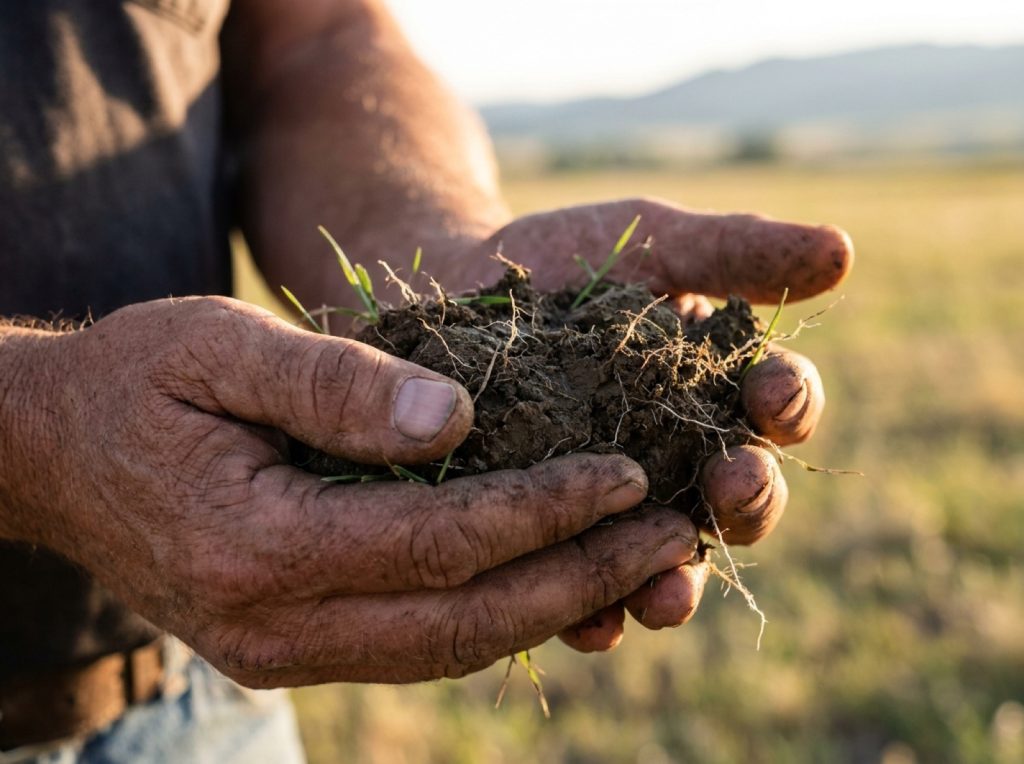
We focus on increasing the microbiology in our soil. Everything good that follows — the forage, the cattle, the beef on your plate — starts with what is alive underground.
We feed the ground first. Healthy soil is the foundation everything else is built on.
Soil microbes unlock minerals and nutrients in a form plants can actually use.
Biodiverse forage grown in living soil carries far more nutrition per bite.
Fermented forage multiplies the nutrients and health benefits of grass-fed beef
The result is increased marbling, omega-balanced, nutrient dense beef
No hormones, no antibiotics, no pesticides, no insecticides, and no synthetic fertilizers
Most ranching starts by asking what to feed the cow. We start one step earlier and ask what feeds the ground. By building the microbial life in our soil, we grow forage that carries more minerals and more real nutrition — and that shows up in the cattle, and then on your plate.
Healthy soil, healthy cattle, healthy beef, healthy humans. It runs in that order, and there is no shortcut around it.
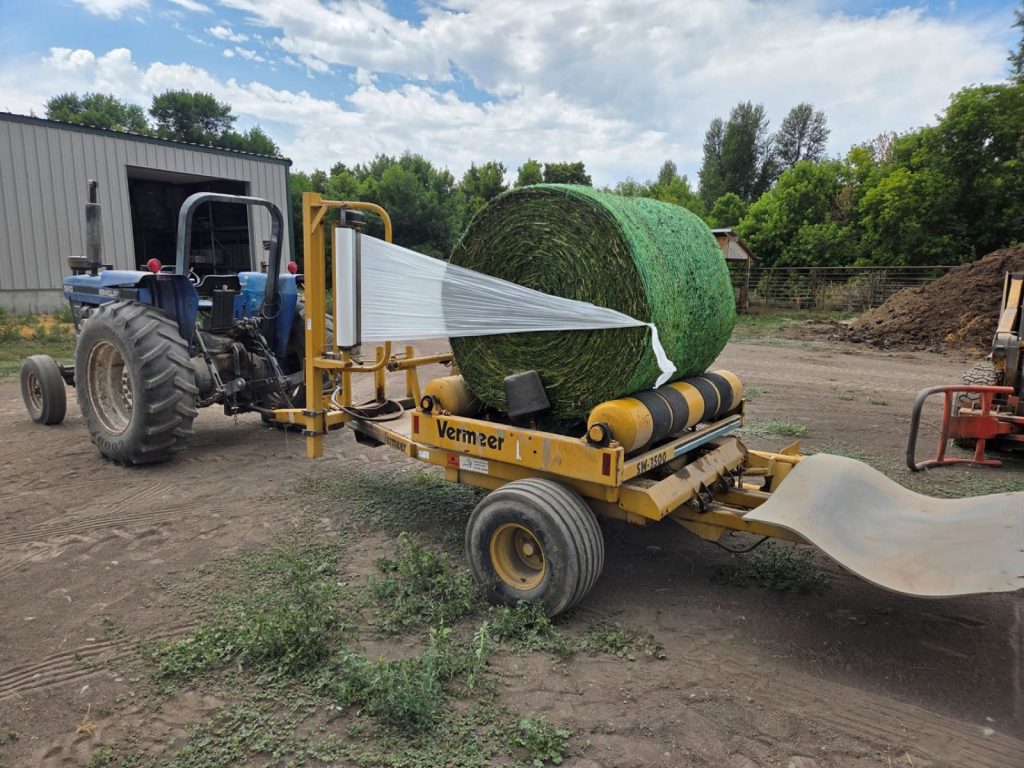
We harvest biodiverse forages at peak nutrition, inoculate them with fermentation microbes, and seal them to ferment — in wrapped bales. The microbes break the forage down allowing the cows to utilize more of the plant’s nutrition which results in higher nutrient dense meat and better marbling.
It is the difference between feed a cow has to work to digest and feed a cow can actually use.
Omega-6 to Omega-3 ratio
More omega-3 than the grain-fed sample
Compounds significantly higher
Antioxidant & anti-inflammatory activity
Grain-fed beef commonly tests above a 20:1 omega-6 to omega-3 ratio. Figures above compare fermented-forage-fed beef with grass-fed and grain-fed samples.
Independent laboratory analysis compared fermented-forage-fed beef against grass-fed and grain-fed beef across 156 measured compounds.
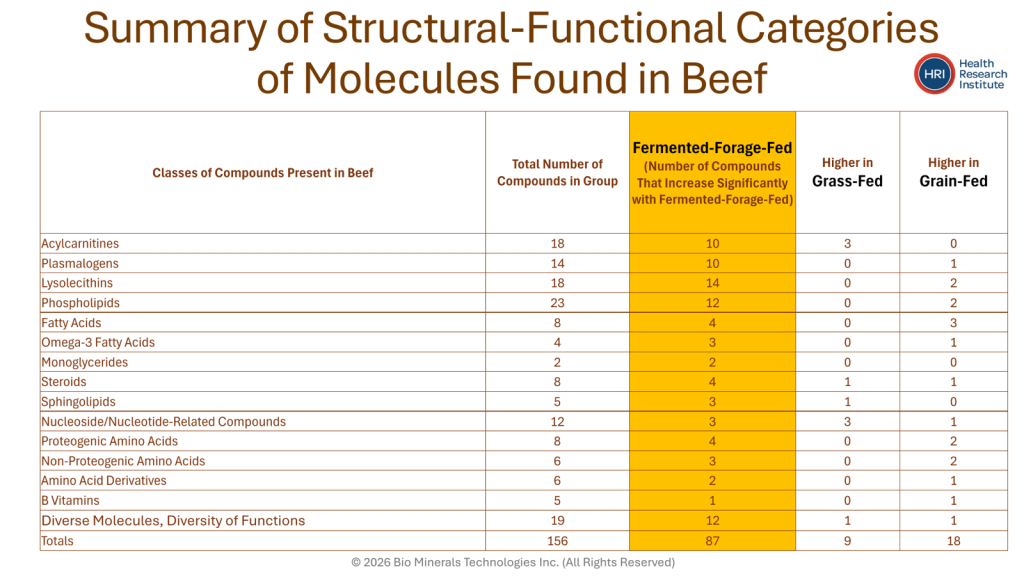
87 of 156 compounds increase significantly
Acylcarnitines, plasmalogens, lysolecithins, phospholipids and omega-3 fatty acids all rise with fermented forage.
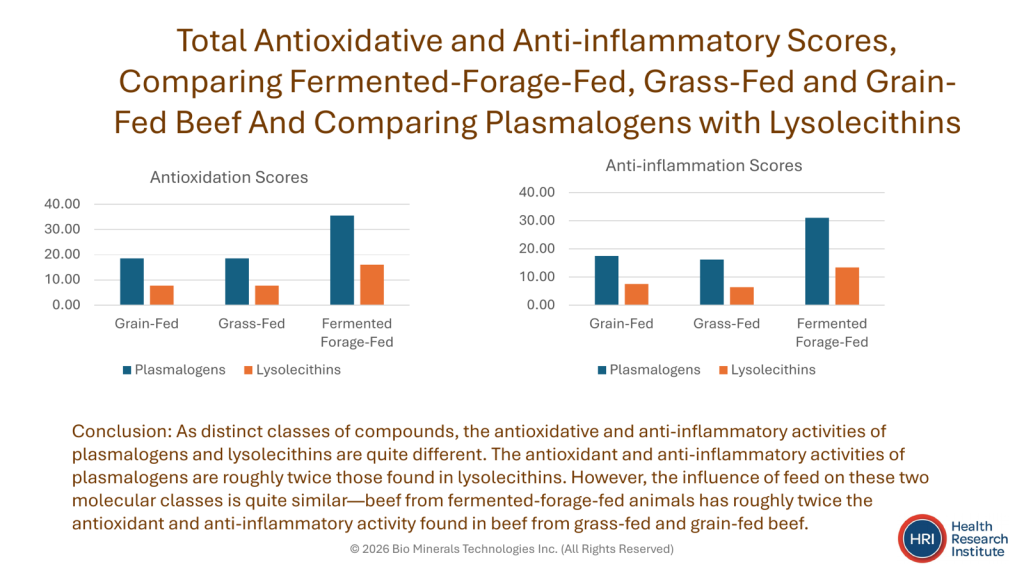
Roughly twice the antioxidant activity
Fermented-forage-fed beef scored about double the antioxidant and anti-inflammatory activity of grass-fed and grain-fed beef.
Charts and laboratory data © Bio Minerals Technologies Inc. Testing completed at Microbac Laboratories, Utah State University Department of Nutrition, Dietetics & Food Sciences, and Health Research Institute Labs.
The same microbes that unlock nutrition also break down things you do not want in your beef.
Tested at 28.8 ng/g fresh, down to 13.2 after three months of fermentation, and undetectable at six months.
Treated fescue dropped from 2,864 PPB to 37 PPB in 60 days — well under the 200 PPB safety limit.
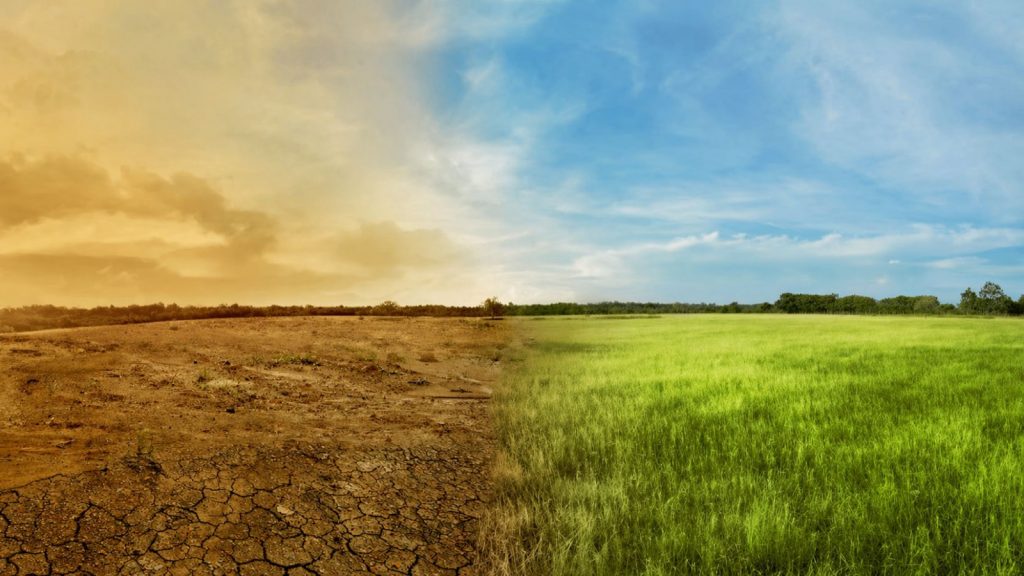
Grazing cattle on fermented biodiverse forage puts living microbiology straight back into the soil. Over time that rebuilds organic matter, holds more water, and brings tired, dry ground back to life.
It is the whole idea behind regenerative ranching: leave the land better every season, and it will keep growing better feed, better cattle, and better beef.
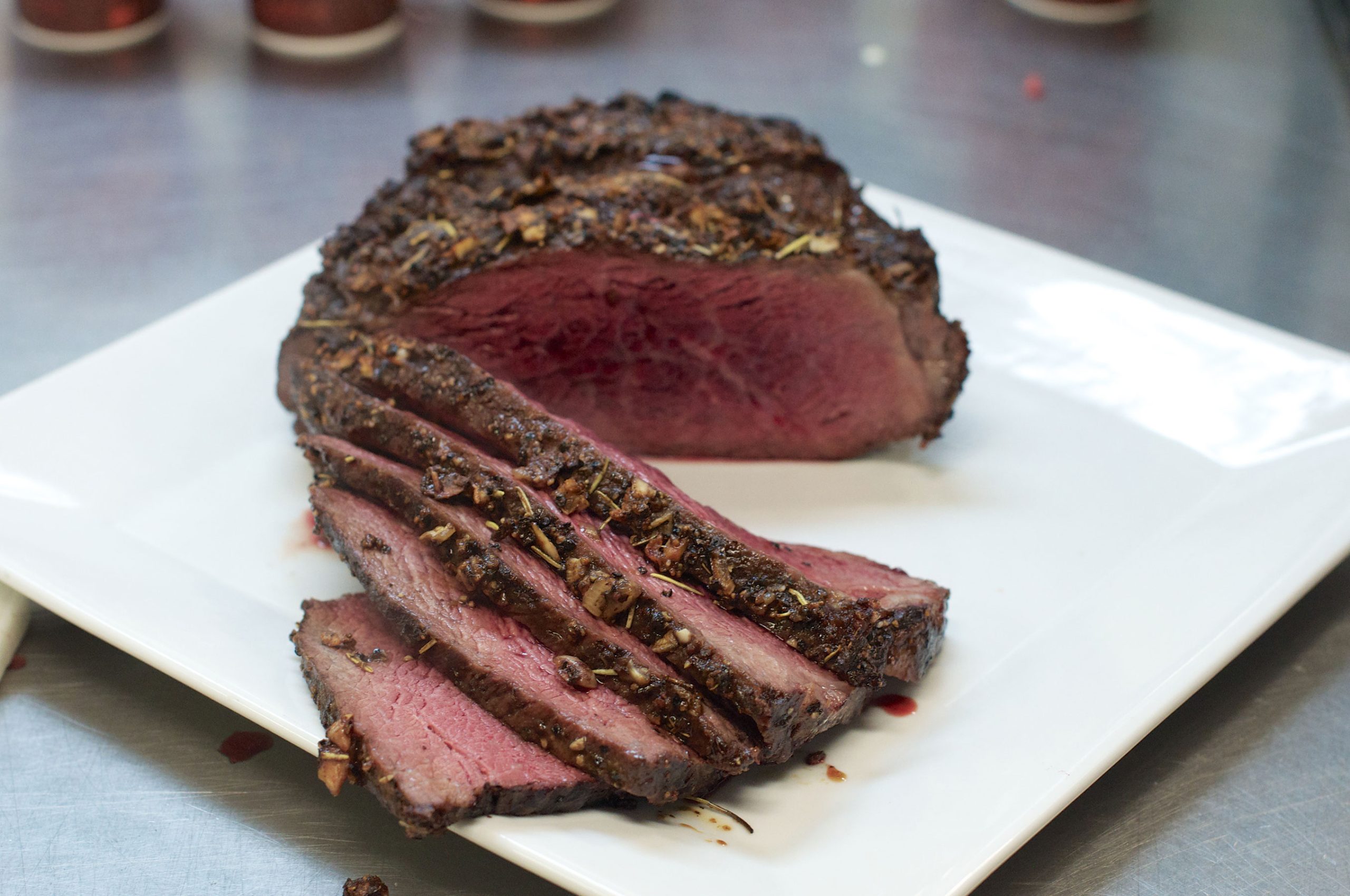
Nutrient-dense beef, raised from the soil up in the Bear Lake Valley.
Reserve Your Beef Ask Us About It